

WATERVILL exists thanks to the diverse consortium that makes up its partnership, bringing together municipalities, universities, associations of local governments and water organisations. The “Meet the partners” series aims to present WATERVILL partners through short interviews, highlighting each organisation’s work, their role in the project and the team involved.
We continue the series, introducing this time project partner University of Zagreb, Faculty of Mechanical Engineering and Naval Architecture (UNIZAG FSB).
PARTNER OVERVIEW
- Organisation: University of Zagreb, Faculty of Mechanical Engineering and Naval Architecture (UNIZAG FSB)
- Type of organisation: University, research institute
- Location: Zagreb, Croatia
- University staff: 500
- Expertise: Mechanical engineering, naval architecture, robotics, aeronautical engineering
ABOUT THE University of Zagreb, Faculty of Mechanical Engineering and Naval Architecture
CAN YOU SHARE AN INTERESTING DETAIL ABOUT YOUR ORGANISATION?
A particularity of UNIZAG FSB is the strong focus on real-life application – ideas are rarely left on paper. There is a shared mindset that solutions should be tested, validated and improved in practice, often in collaboration with partners across different regions. This hands-on approach is supported by a culture of curiosity and openness, where interdisciplinary exchange is encouraged and practical challenges are seen as opportunities for innovation. As a result, research activities are closely connected to real-world needs, ensuring that developed solutions are both applicable and impactful.
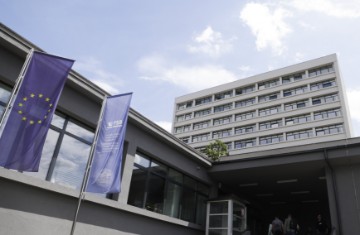
[At UNIZAG], there is a shared mindset that solutions should be tested, validated and improved in practice often in collaboration with partners across different regions.
WHAT ABOUT YOUR EXPERIENCE WITH EU-FUNDED PROJECTS?
UNIZAG FSB has extensive experience in EU-funded projects, particularly within programmes such as Interreg, Horizon Europe and EUKI, focusing on energy systems, water management and sustainable regional development. The institution is actively involved in projects that combine technical modelling, data analysis and stakeholder engagement, with a strong emphasis on real-life implementation and policy relevance.
Its role often includes project coordination, development of decision-support tools and validation of solutions in real-world environments across different regions. This experience ensures a strong capacity to contribute effectively to projects such as WATERVILL, bridging research and practice to deliver tangible, impact-oriented results.
WHAT DOES FSB’s WORK FOCUS ON?
UNIZAG FSB focuses on higher education, scientific research and innovation in the fields of mechanical engineering, naval architecture, robotics and aeronautical engineering. Its work integrates teaching and research, combining theoretical knowledge with practical application through laboratory work, industry collaboration and student involvement in real-world challenges.
Guided by the idea that “knowledge becomes solutions,” the organisation emphasises a hands-on, problem-solving approach, ensuring that both education and research contribute to addressing real societal and technological challenges.
FSB and WATERVILL
WHAT EXPERTISE DOES YOUR ORGANISATION BRING TO WATERVILL?
UNIZAG FSB brings strong expertise in data analysis, system modelling and the development of decision-support tools for complex technical systems. It has extensive experience in integrating technical, environmental and operational data into practical solutions, with a particular focus on optimisation and performance assessment. The organisation also contributes with its capacity to link research with real-world implementation, including validation of solutions in pilot environments and collaboration with local stakeholders.
In the context of WATERVILL, this expertise supports the development of innovative approaches for improving water management, reducing losses and enabling more efficient and sustainable operation of water systems.
WHAT MOTIVATED YOU TO ENGAGE IN WATERVILL?
UNIZAG FSB was motivated to engage in WATERVILL by the opportunity to address pressing challenges related to water management in rural and Mediterranean regions. Water systems are increasingly under pressure due to climate change, including more frequent droughts, variability in water availability and growing stress on infrastructure, making it essential to develop more resilient and adaptive solutions. The project strongly aligns with the organisation’s approach of applying knowledge to real-world challenges through innovative, data-driven solutions.
In the context of WATERVILL, [our] expertise supports the development of innovative approaches for improving water management, reducing losses and enabling more efficient and sustainable operation of water systems.
WHAT DO YOU FIND MOST EXCITING ABOUT THE PROJECT?
The most exciting aspect of the project is the opportunity to develop and test innovative solutions in real-life environments across different regions. The combination of advanced data analysis, practical implementation and close collaboration with local stakeholders creates a dynamic setting where ideas can quickly evolve into tangible results.
Additionally, the international and interdisciplinary nature of the project makes it particularly valuable, as it enables knowledge exchange and the co-creation of solutions that can be replicated in other regions facing similar challenges.
MEET THE PROJECT TEAM
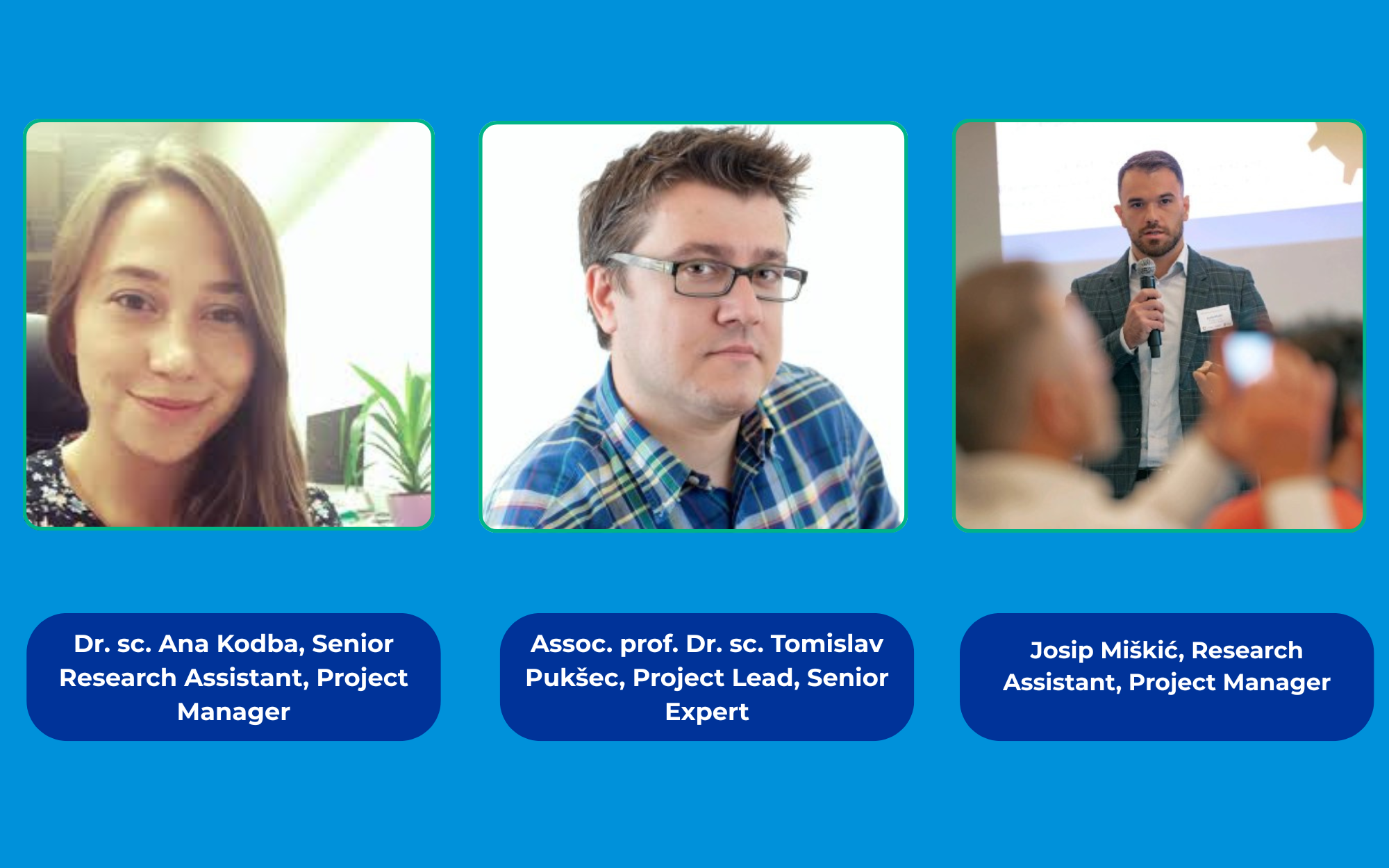
The project team at UNIZAG FSB consists of Dr. sc. Ana Kodba, Senior Research Assistant, Project Manager, Assoc. prof. Dr. sc. Tomislav Pukšec, Project Lead, Senior Expert, and Josip Miškić, Research Assistant, Project Manager, combining expertise in project management, advanced modelling and practical implementation.
FOR MORE
Learn more about the Faculty of Mechanical Engineering and Naval Architecture on their website .